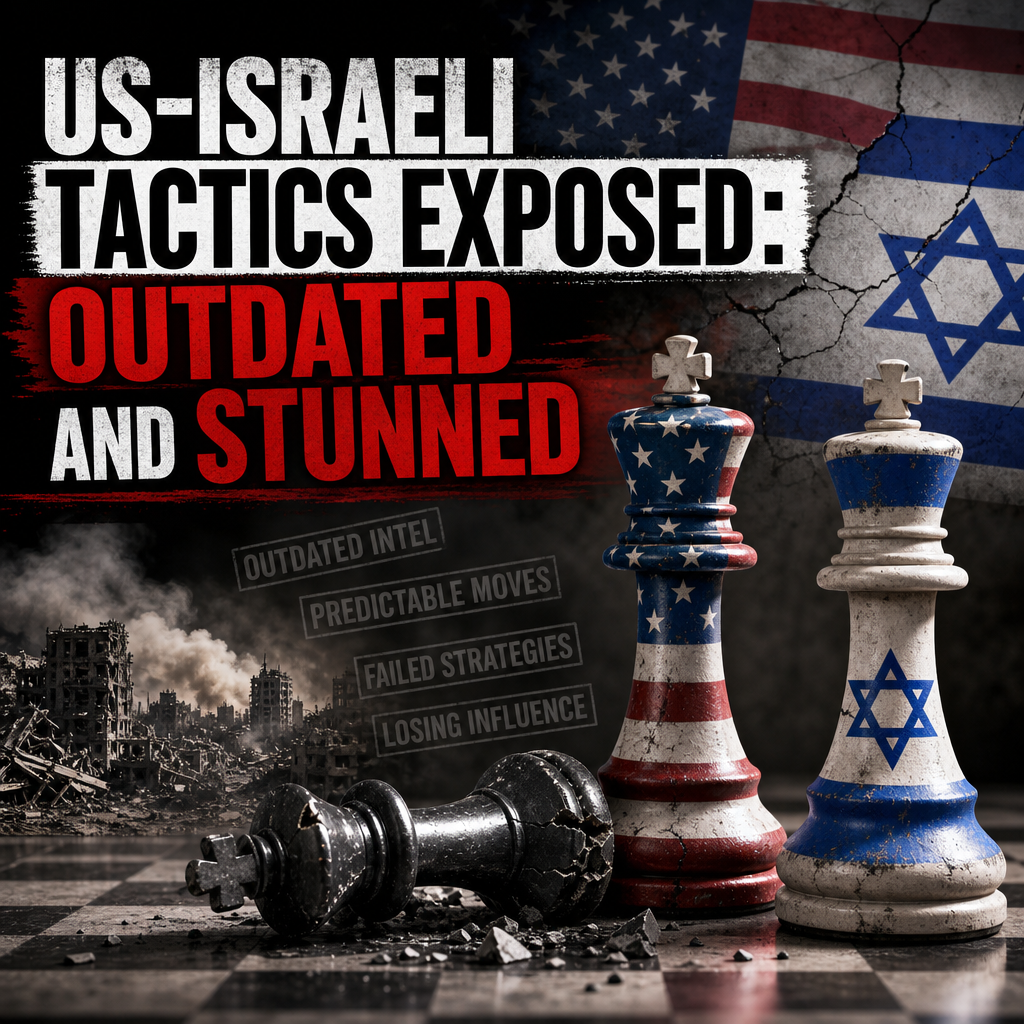
US-Israeli Tactics Exposed: Outdated and Stunned


US-Israeli tactics exposed have become harder to sell as the war in Gaza drags on, humanitarian pressure grows, and even long-standing diplomatic language sounds increasingly out of step with what is happening on the ground. What once looked like a familiar pattern of allied coordination now appears to many observers as a strategy running into public skepticism, legal scrutiny, and political fatigue.
US-Israeli tactics exposed: why the old playbook is losing force
For decades, Washington and Jerusalem have often worked in tandem: Israel sets the military tempo, while the United States provides diplomatic cover, weapons, and pressure at key moments. The logic was simple enough to understand, even when many people disagreed with it. Israel would argue it was defending itself; the US would frame its role as a stabilizing broker; and both sides would present their actions as necessary, if imperfect, responses to security threats.



That formula is increasingly being challenged.
Across coverage from RT, Al Jazeera, and Sky News, a common thread emerges: the gap between official rhetoric and public perception is widening. RT’s framing is the most openly skeptical, portraying the US and Israel as using a familiar “good cop, bad cop” routine to shape outcomes while preserving strategic advantage. Al Jazeera’s reporting tends to focus more on the human cost and the political consequences of the war, especially for Gaza’s civilians and for Palestinians seeking an end to the fighting. Sky News, meanwhile, usually situates the conflict inside the broader diplomatic and military picture, with attention to ceasefire negotiations, hostage talks, and international pressure.




Taken together, these viewpoints suggest that the tactics are not necessarily “newly exposed” in a literal sense. Rather, they are being seen more clearly by a global audience that is less willing to accept the old language of restraint, proportionality, and strategic patience.
The humanitarian argument is reshaping the debate
One reason the old approach looks outdated is the scale of the humanitarian crisis. Al Jazeera’s coverage has repeatedly emphasized displacement, shortages of food and medicine, and the strain on civilian infrastructure. That lens matters because it changes the center of gravity in the debate. When civilian suffering becomes the dominant story, military justifications begin to sound less persuasive, especially if there is no visible political endgame.
This has also made the US position harder to defend. American officials often say they want both Israeli security and protection for civilians, but critics argue those aims have not been balanced in practice. If arms continue flowing while civilian deaths mount, then talk of restraint can seem more like damage control than policy. That is one reason the US is being pressed not only by regional actors, but also by allies, protest movements, and rights organizations.
At the same time, it would be too simple to say Washington has no leverage or that Israel is merely following orders. Sky News’ broader geopolitical framing reflects a more complicated reality: Israel has its own domestic politics, security fears, and military objectives. The US may be Israel’s most important ally, but that does not mean the relationship is one-dimensional. In fact, tension between strategic dependency and political autonomy is part of what makes the alliance so hard to manage.
Why the “good cop, bad cop” approach feels less credible now
RT’s criticism of the US-Israel relationship points to a larger issue: audiences are increasingly able to detect coordinated messaging. When one side issues harsh military warnings and the other speaks the language of diplomacy, it can look like theater designed to keep negotiations controlled rather than genuine attempts to stop violence.
That skepticism is not confined to one region or one political camp. It has grown because:
– the conflict has lasted far longer than many early expectations;
– ceasefire talks have repeatedly stalled or produced only partial outcomes;
– civilian casualties have remained central to public concern;
– and international institutions have struggled to enforce meaningful consequences.
The result is a credibility problem. If the same talking points are repeated while conditions on the ground worsen, people begin to assume the messaging is designed to manage outrage rather than resolve the conflict.
There is also a broader strategic cost. The more the US is seen as shielding Israel from accountability, the more difficult it becomes for Washington to claim neutrality in future negotiations. That matters not only for Gaza, but for wider regional diplomacy, including relations with Arab states and attempts to contain escalation beyond Gaza’s borders.
The limits of military leverage and diplomatic spin
A fair reading of the current moment is that both Israel and the US are encountering the limits of force and narrative. Israel can still project military power, but military gains have not automatically translated into a durable political settlement. The US can still broker talks, but its credibility is weakened when it is viewed as too close to one side to serve as an honest mediator.
This is where the contrast among the sources becomes useful. RT emphasizes the manipulative side of the alliance. Al Jazeera foregrounds the suffering and the asymmetry of power. Sky News keeps one eye on the diplomatic chessboard and the uncertainty of the next move. None of these perspectives alone gives the full picture, but together they show why the conflict remains so resistant to clean conclusions.
The most honest conclusion is probably this: the tactics of coordinated pressure, selective messaging, and strategic ambiguity have not disappeared, but they are less effective than they used to be. The world is more skeptical, the humanitarian costs are more visible, and the political stakes are higher. That does not mean a breakthrough is impossible. It does mean the old methods are no longer enough on their own.
If there is a lesson in the current moment, it is that military superiority and diplomatic insulation can delay accountability, but they cannot erase it. The longer the war continues without a credible path to civilian protection, hostage resolution, and a political settlement, the more the US-Israeli partnership will be judged not by what it says, but by what it allows to happen.